
Complete Tattoo Aftercare Guide: Days 1–30
Keep your fresh tattoo covered for the first 2–4 hours, then wash it gently with fragrance-free soap and lukewarm water, pat it dry, and apply a thin layer of recommended ointment. Avoid sun, pools, and tight clothing while it heals. The surface heals in about 2–3 weeks; full healing underneath takes 4–6 weeks.
That’s the short version. What follows is the day-by-day breakdown — what’s normal at each stage, what’s not, and what to actually avoid so the piece you just paid for heals the way it’s supposed to. This guide covers general best practice; your artist’s specific aftercare sheet takes priority if it differs from anything here, since some inks and techniques call for small adjustments.
Days 1–3: The First 72 Hours
This is the stage most people get wrong by either doing too much or not enough.
- Leave the initial covering on for as long as your artist tells you to — they’ll walk you through exactly what’s on your skin and when to take it off before you leave the studio. Don’t peek early.
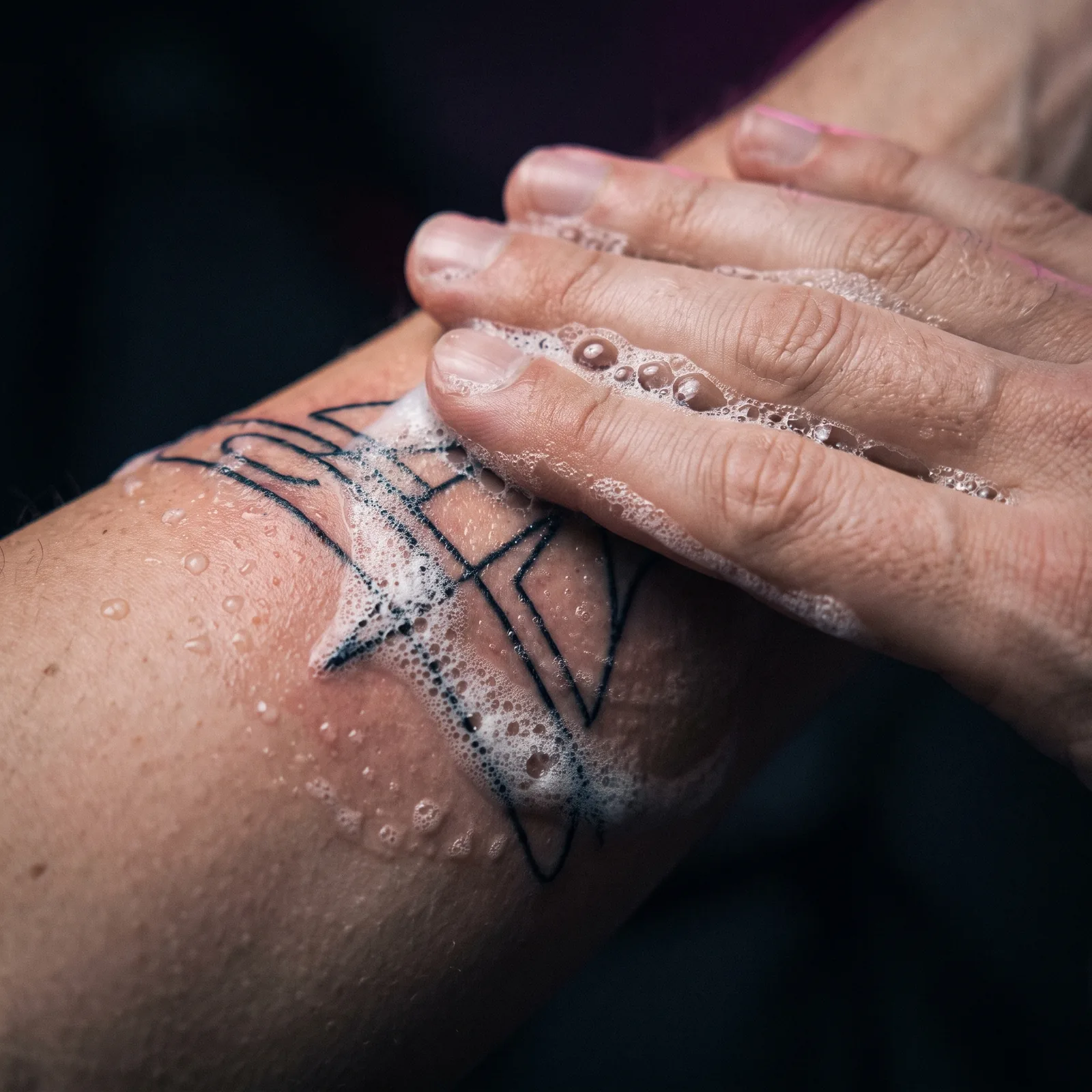
- Wash 2–3 times a day once it’s uncovered: lukewarm water, a small amount of fragrance-free antibacterial soap, gentle circular motion with clean hands — no washcloth, no loofah. Pat dry with a clean paper towel; don’t rub.
- Apply a thin layer of ointment after each wash. Thin is the key word — a thick coat traps moisture and can slow healing or clog the piece.
- Expect redness, mild swelling, warmth, and some oozing of plasma and excess ink. All normal. Your tattoo is an open wound for these first few days and your body is treating it like one.
- Sleep on clean sheets and try to keep the area from rubbing against fabric or a partner overnight.
- Skip the gym, the pool, and direct sun entirely for now. Sweat, chlorine, and salt water all slow healing and raise infection risk on an open wound.
Days 4–7: Peeling Starts
Around day 4, the tattoo usually starts to look like a sunburn that’s about to peel — because that’s essentially what’s happening.
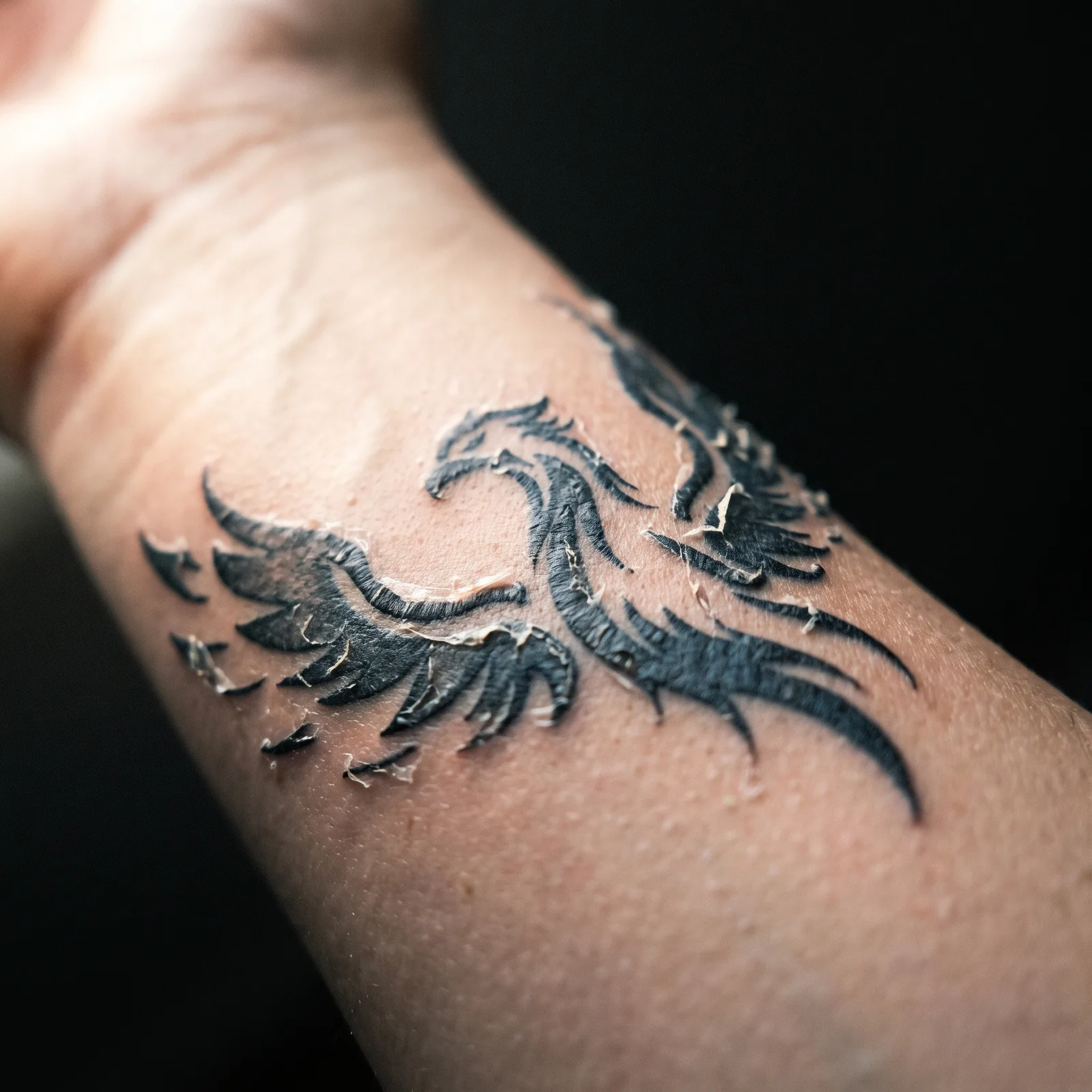
- Peeling and itching are normal. Thin flakes of skin (sometimes with a bit of color in them) will start lifting. Let them come off on their own in the shower. Picking or scratching can pull ink out unevenly and leave patchy spots that need a touch-up later.
- Switch to a fragrance-free lotion once the skin starts feeling tight or dry, instead of the heavier ointment — most people make this switch somewhere around day 3–4. Keep it thin.
- Swelling and redness should be trending down, not up. A little residual pinkness is fine; redness that’s spreading or getting worse a week in is not — see the table below.
- Still no pools, hot tubs, or ocean. If you’re healing during beach season here in South Florida, this is the week that tests your patience most — the ocean and a fresh tattoo don’t mix, no matter how good the water looks.
- Keep sun exposure at zero. New skin burns fast and UV exposure can fade or blotch a tattoo permanently before it’s even finished healing.
Days 8–14: The Itchy Middle
By the second week, most of the visible peeling has stopped, but the itching often peaks right here — which is its own kind of annoying.
- Itchiness usually means it’s healing, not that something’s wrong, as long as there’s no pain, heat, or discharge behind it. Slap it, don’t scratch it, if you need relief.
- The tattoo may look dull, cloudy, or slightly hazy. That’s dead skin still working its way off, not the final result. Don’t panic about how it looks yet.
- Keep moisturizing lightly — a thin layer of fragrance-free lotion once or twice a day is usually enough by now.
- Sun and soaking rules still apply. The surface may look healed before it actually is.
- Sweating and the gym — ease back in rather than jumping straight to a heavy session. Sweat itself won’t ruin a healing tattoo, but friction from tight gym clothes rubbing against it will. Loose clothing over the area and a quick rinse after are the main things to keep in mind.
Days 15–30: Settling In
- The surface is typically fully healed by week 3, but the skin underneath keeps rebuilding for another couple of weeks — this is why color can still look slightly duller or softer than final for a bit longer.
- Minor color loss during peeling is common and not necessarily a sign of a bad heal. If you notice actual bald or patchy spots once everything’s settled, that’s a touch-up conversation, not a panic.
- Touch-up policy — bring it in and your artist will tell you plainly whether what you’re seeing is normal healing variation or an actual touch-up situation, and what that looks like for your specific piece.
- Sun protection becomes a long-term habit, not just a 30-day rule. SPF 30+ over healed ink keeps colors and black work from fading years down the line — worth remembering every time you’re headed to the beach.
Normal Healing vs. Warning Sign
Some redness, swelling, and itching are part of every heal. The table below is the line between “this is your skin doing its job” and “this needs attention now.” The underlying red flags are the same whether it’s fresh ink or a fresh piercing — our piercing healing guide breaks down the same normal-vs-warning logic in more detail if you’re working through both.
| Sign | Normal Healing | Warning Sign |
|---|---|---|
| Redness | Present days 1–5, fading after | Spreading outward or getting worse after day 5 |
| Swelling | Mild, worst in first 48 hours | Increasing after day 3, or hard/hot to the touch |
| Discharge | Small amount of clear or slightly bloody plasma early on | Thick yellow or green pus, or a foul smell |
| Pain | Tender like a sunburn, easing daily | Getting sharper or worse instead of better |
| Itching | Common days 4–14 | Paired with pain, heat, or oozing |
| Skin temperature | Slightly warm first couple days | Hot to the touch after day 3–4 |
| Whole-body symptoms | None | Fever, chills, or red streaking spreading from the tattoo |
If anything lands in that right-hand column, don’t wait it out and don’t try to self-diagnose from a forum thread — come in or text us and we’ll take a look. Worst case, it’s nothing and you’ve lost five minutes. Best case, catching it early is the difference between a quick fix and a real problem.
What Not to Do
A short list, but the one people ignore most:
- Don’t pick, scratch, or peel skin off yourself. Let it fall off in the shower on its own schedule.
- Don’t soak it — no pools, hot tubs, baths, or ocean swimming until it’s fully healed. Quick showers only.
- Don’t use petroleum jelly, alcohol, or hydrogen peroxide on it. They either trap moisture wrong or dry the skin out and pull color with it.
- Don’t over-moisturize. A tattoo sitting under a thick, shiny layer of ointment all day isn’t healing faster — it’s suffocating.
- Don’t tan or expose it to direct sun, even through a car window.
- Don’t wear tight or rough fabric over it while it’s raw. Loose, breathable clothing only.
- Don’t let pets near it, and keep it away from anything that isn’t clean — gym equipment, unwashed hands, dirty bedding.
Every needle and tool that touched your skin during the session was single-use and sterile — see our full safety and sterility standards if you want the details on how we handle that end of things. Your job now is just to not undo the clean start you got.
For the full printable checklist and the exact products we hand out in the studio, check our complete aftercare page — it’s worth bookmarking before your appointment, not after.
Not sure if what you’re seeing is normal? Book Your Free Consult →
FAQ
How long does a tattoo take to fully heal?
The surface typically looks healed within 2–3 weeks, but the deeper layers of skin keep rebuilding for 4–6 weeks total. Full color and texture settle in gradually over that window — don’t judge the final result until at least a month out.
Can I go to the beach or pool while my tattoo is healing?
No. Pools, hot tubs, and the ocean all carry bacteria that a fresh tattoo is especially vulnerable to, and chlorine or salt water can pull ink and irritate the skin. Wait until it’s fully healed — roughly 2–4 weeks, longer for larger pieces — before swimming.
Is peeling normal, and can I pick at it?
Peeling is a normal part of healing, usually starting around day 4. Let it flake off on its own in the shower — picking it early can pull ink out unevenly and leave you with patchy spots that need a touch-up.
Why is my tattoo still itchy after two weeks?
Itching during the second week is common as deeper skin layers finish rebuilding. It’s only a concern if it’s paired with pain, heat, swelling, or discharge — on its own, itching is usually just healing, not infection.
When should I actually worry?
Spreading redness after day 5, pus or a foul smell, increasing pain instead of decreasing, or fever and chills are all reasons to stop waiting and get it looked at. Come in or text us — we’d rather check something that turns out fine than have you guess wrong on something that isn’t.
Questions about how your new tattoo is healing? Book Your Free Consult →