
Titanium vs Gold Jewelry: Which Is Safer for New Piercings?
Implant-grade titanium (ASTM F136) is the gold standard for fresh piercings — biocompatible, nickel-free, and the least likely metal to trigger a reaction while you’re healing. 14k+ solid gold is the only real alternative from day one. Gold-plated jewelry, sterling silver, and most “surgical steel” pieces all carry real risk in a piercing that hasn’t closed yet.
That’s the short version. The longer version covers why metals that sound safe — “surgical” steel, gold-plated anything — aren’t great choices for week one, and how to tell an angry-but-normal skin reaction from an actual infection, the question behind most late-night piercing panic. It’s the same sterility standard we hold for the piercing itself; see our safety and sterility practices for how we handle needles and jewelry stock alike.
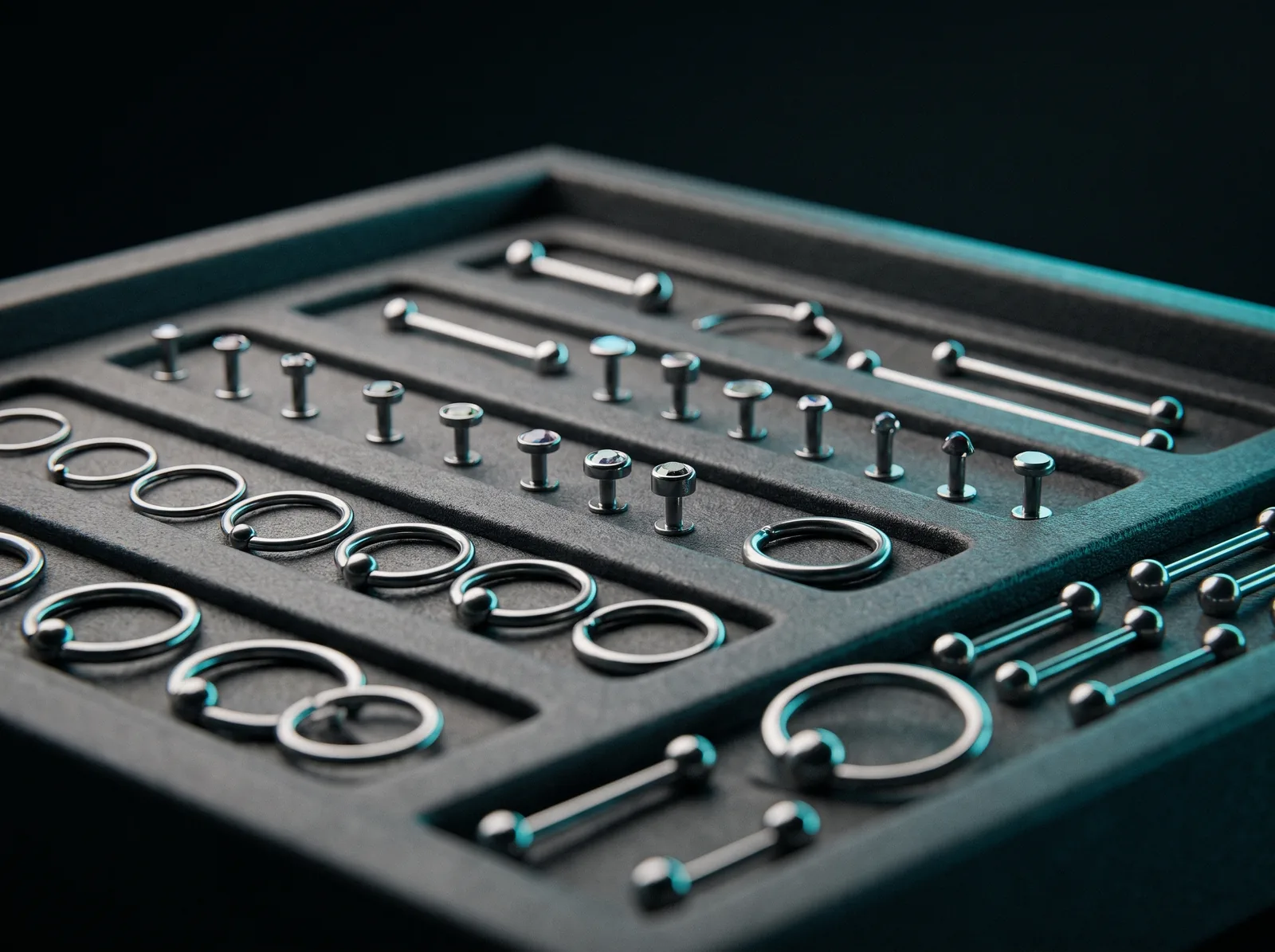
What Makes a Metal “Safe” for a Fresh Piercing
A fresh piercing is an open wound for weeks, sometimes months, depending on placement. Whatever sits in it needs to be biocompatible — your body doesn’t read it as a foreign irritant — and non-porous enough that it won’t harbor bacteria or trap healing fluid against your skin.
The material that hits both marks most consistently is implant-grade titanium, graded ASTM F136, the same standard used for surgical bone implants. It’s nickel-free, which matters because nickel is the single biggest cause of metal allergy in jewelry generally. Implant-grade titanium is our standard for every new piercing — it’s included in the price, not an upgrade.
14k+ solid gold is the other real option, for clients who want the gold look from day one. Below 14k, the alloy mix needed to keep gold workable usually includes enough nickel to matter in a wound that hasn’t closed. Everything else on the shelf has a place — just not in week one.
Materials Comparison: Titanium, Gold, Steel, and Silver
| Material | Biocompatibility | Best For | Watch Out For |
|---|---|---|---|
| Implant-grade titanium (ASTM F136) | Excellent — nickel-free, the same standard used in surgical implants | Every fresh piercing, especially sensitive skin | Costs slightly more than steel; no real downside otherwise |
| 14k+ solid gold | Very good, if genuinely solid and 14k or higher | Fresh piercings, if you want the gold look from the start | Anything under 14k has enough alloy metal (often nickel) to raise reaction risk |
| Gold-plated / gold-filled | Poor for new piercings | Healed piercings, short-term or occasional wear | Plating wears through with normal healing fluid contact, exposing the base metal underneath |
| Surgical steel (316L) | Fair — industry-common, but not nickel-free | Healed piercings, non-sensitive skin | Contains trace nickel; not the recommended first choice for an initial piercing |
| Sterling silver | Poor for any piercing | Not recommended for body jewelry at all | Tarnishes and oxidizes against skin; residue can work its way into the wound |
Two things worth pulling out of that table. “Surgical steel” sounds medical-grade by name alone, which is exactly why it trips people up — legitimate, widely used, just not the safest bet for a piercing that’s still healing. And silver is the one to avoid entirely for body jewelry, healed or not — it’s built for skin contact, not for sitting inside a puncture.
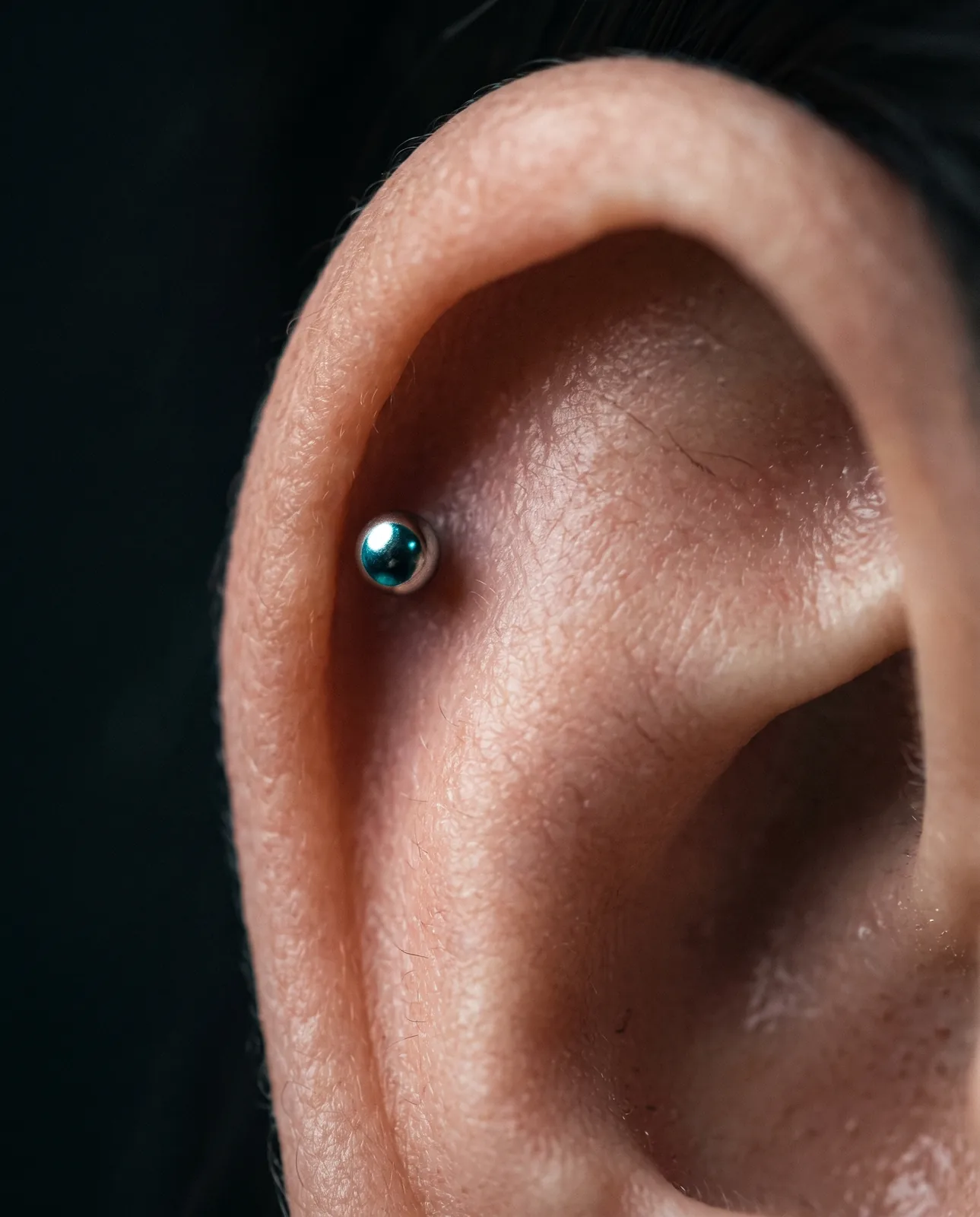
Metal Reaction or Infection? How to Tell the Difference
This is the most common piercing panic we hear. Skin gets irritated and the instinct is to assume infection — most of the time, it’s the metal, not a bug.
Signs pointing to a metal reaction:
- Itching around the piercing, more than sharp pain
- Skin that looks dry, flaky, or slightly darkened right where the jewelry sits
- A green or black smudge on the jewelry or skin — metal residue rubbing off a lower-quality piece
- Redness that stays local to the contact area and isn’t getting worse day to day
Signs that lean toward infection:
- Pain that’s getting worse after day 3–5, not settling down
- Swelling and redness spreading outward instead of staying put
- Thick yellow or green discharge — not the clear-to-light-yellow fluid that’s normal early on
- The area feels hot to the touch, or you develop a fever
A reaction usually calms down fast once the offending metal is swapped for implant-grade titanium. An infection needs a different response, and time matters there. We break down the full day-by-day normal-vs-warning-sign picture in Is My Piercing Infected or Just Healing?.
Either way, the rule doesn’t change: if you’re not sure, don’t self-diagnose off a forum thread. Come in or text us and we’ll take a real look.
When to Upgrade Your Jewelry
Once a piercing is fully healed, the rules relax — healed skin has a proper barrier, so the fluid contact that made lower-grade steel or under-karat gold risky in week one isn’t the same fight. That’s when most clients start building a real jewelry collection instead of sticking with one starter piece.
Healing time before a safe swap follows the same ranges as healing in general — 6 to 8 weeks for a lobe, several months for cartilage (our ear piercing guide breaks down the range by placement). If you’re not sure yours is ready, bring it in and we’ll check before you change anything.
We carry implant-grade titanium and 14k+ gold jewelry for both fresh piercings and healed upgrades, so you’re not guessing at compatibility every time you want something new.
Shop jewelry that’s actually safe for your piercing. Browse Jewelry →
FAQ
Can you be allergic to titanium?
True titanium allergy is rare — it’s one of the least reactive metals used in medicine, which is why it’s the default for piercings and surgical implants alike. What often gets called a “titanium allergy” is actually a reaction to a different metal in a lower-quality piece sold as titanium without being implant-grade certified.
Is surgical steel safe for a new piercing?
It can work for some people, but it’s not the first choice. Surgical steel contains trace nickel, which is why it’s not the recommended material for an initial piercing. If your skin already tolerates steel well in healed piercings, it’s a reasonable choice for future jewelry — just not the safest bet on day one.
Why is gold-plated jewelry bad for a fresh piercing?
Plating is a thin layer, and healing fluid wears through it faster than normal daily wear would. Once it’s worn through, whatever base metal sits underneath — often brass or a nickel alloy — is touching an open wound directly. Save gold-plated pieces for healed, low-friction jewelry rotation.
How long should I wait to switch out my starter jewelry?
It depends on placement — 6 to 8 weeks for a lobe, several months for cartilage (see our ear piercing guide for the full range). Swap too early and you reopen the same risk from week one, this time possibly with a lower-grade metal in it.
Does Foenix Ink sell titanium and gold jewelry?
Yes — implant-grade titanium and 14k+ gold, available in-studio and through our jewelry shop.
Not sure what’s actually in your ear? Browse Safe, Implant-Grade Jewelry →