
Curated Ear Stack Guide: How to Plan Multiple Piercings
A curated ear stack starts small: 1 to 2 anchor piercings — usually a lobe plus a helix, tragus, or conch — then builds outward over several visits. Let each new piercing heal before adding one near it, plan your jewelry in layers instead of buying pieces one at a time, and treat the stack as a project, not a single appointment.
That’s the short version. Most “instant stack” photos on Pinterest or TikTok weren’t done in one sitting — they’re months of planning, spaced-out healing, and jewelry chosen to work together. Here’s how to build one without wrecking your ear along the way.
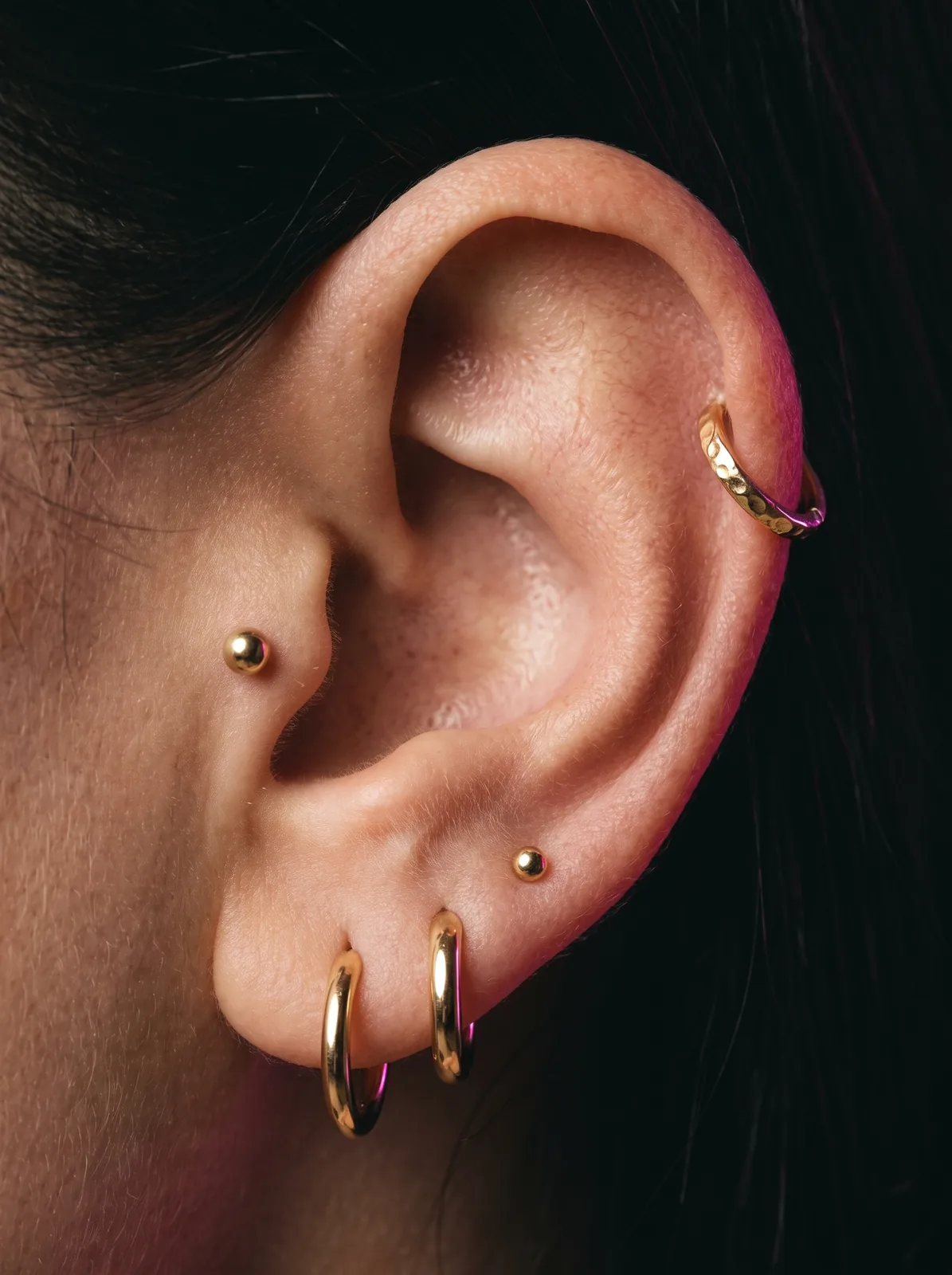
Start With Anchor Piercings, Not the Whole Stack
Every good stack has a starting point — one or two piercings that anchor the rest of the design. A first or second lobe, a helix, or a tragus all work well because they heal predictably and give you a visual reference for planning everything else around them.
Resist the urge to book five piercings on day one because a reference photo has five. That photo is the finished product, not the build plan. Anchors first — then you add placements around them once you can see how your ear actually sits, how your cartilage curves, and where jewelry naturally wants to rest. A piercer working off your real anatomy, not just a saved photo, is what makes a stack look intentional instead of accidental.
How Long to Wait Between New Piercings on the Same Ear
This is the part most curated-stack content skips, and it’s the part that actually protects your ear.
As a general healing-consensus guideline: lobe piercings typically need 6 to 8 weeks before the area is stable enough to safely add a new piercing nearby. Cartilage piercings (helix, tragus, conch, rook, daith) take longer — most healing guidance puts full healing at 3 to 6 months, sometimes up to a year, and it’s smart to wait until a cartilage piercing is fully settled before adding another one close to it.
Piercings that don’t sit near each other — a lobe and a helix, say — can often be spaced closer together in time, since they’re not competing for the same healing tissue. Piercings crowded into the same small stretch of cartilage need real space between them, both physically and in time.
None of these are hard rules for every ear — healing speed varies by person, placement, and how well aftercare gets followed. If something feels off (more painful at week 3 than it was at week 1, swelling that isn’t settling, anything that looks like it’s getting worse instead of better), don’t wait it out — come in or text us and we’ll take a look. Our ear piercing guide breaks down pain and healing time by placement in more detail.
How Many Piercings Can You Get in One Visit
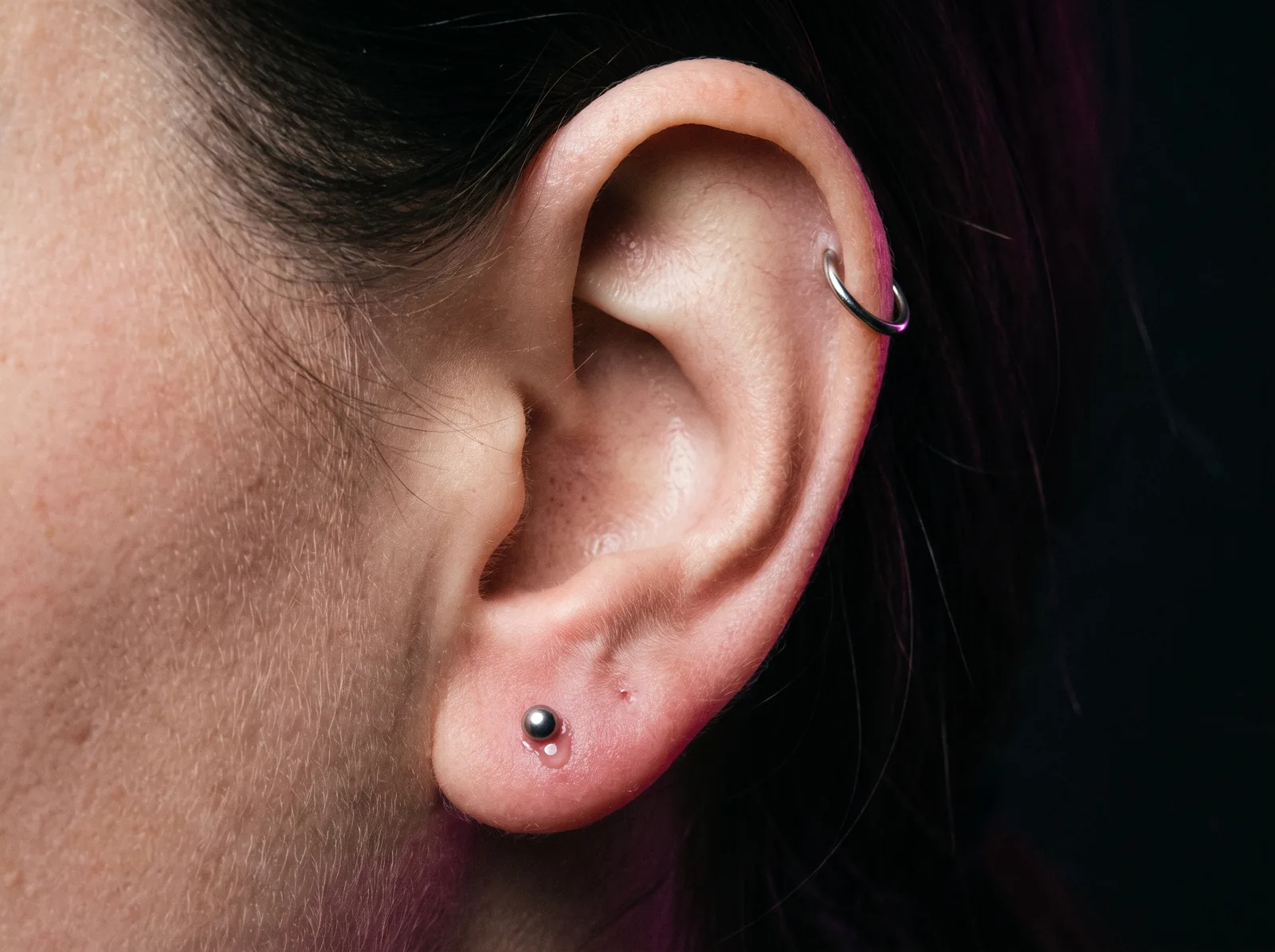
This depends on placement, pain tolerance, and your piercer’s judgment on the day — it’s not a fixed number for every ear. Lobe-only bookings generally allow for more in one sitting than a mix that includes cartilage.
Rule of thumb: piercings in different zones (lobe, mid-cartilage, upper cartilage) combine more easily in one sitting than several crammed into the same small area. Your piercer will tell you honestly if what you’re picturing is a one-visit job or a multi-visit build — that’s not a sales tactic, it’s what keeps your ear from getting overwhelmed.
Jewelry Pairing Logic — What Makes a Stack Look “Curated”
The difference between a stack that reads as curated and one that reads as random usually isn’t the piercings — it’s the jewelry. A few things that actually move the needle:
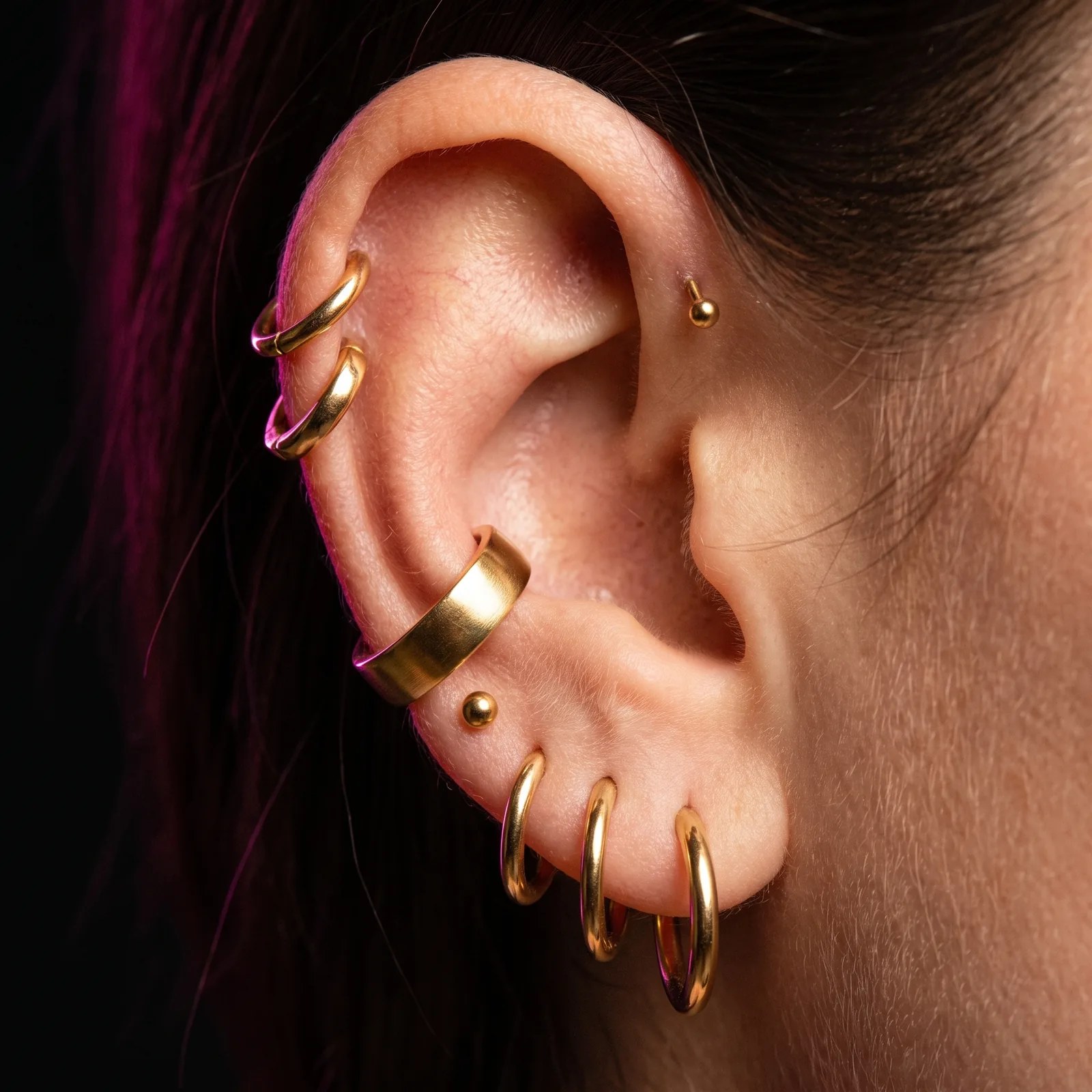
- Pick a metal tone and mostly stick to it. Mixed metals can work, but an all-gold or all-silver stack reads cleaner than pieces that don’t match.
- Vary the size, not just the style. A stack of five identical studs looks flat. Mixing a small stud, a hoop, and a slightly larger piece creates the layered look most reference photos are going for.
- Let healed piercings wear the statement pieces. Fresh piercings need simple, flat-back or implant-grade titanium jewelry — nothing heavy or dangling — while healing. Save hoops and charms for piercings that are fully settled.
- Build the stack, then upgrade the jewelry. Skip buying the “end goal” pieces on day one. Heal with simple jewelry first, then swap in the curated look once everything’s settled.
We carry implant-grade titanium and gold jewelry built for healing ears, and our team can help you plan a piece order that actually pairs well — ask at your visit about pricing for multiple piercings in one sitting.
FAQ
Can I get my whole ear stack done in one appointment?
Not usually — a piercer who says yes to everything in one sitting without checking your ear first isn’t doing you any favors. Anchor piercings can often be grouped, but a full stack is built over several visits so each area has room to heal.
Does the order of piercings actually matter?
Yes. Starting with anchor placements (lobe, helix, tragus) gives you a reference point for how the rest of the stack should sit. Piercing everything at once removes that reference and makes it harder to space new additions well.
What jewelry should I wear while a new piercing heals?
Simple, flat-back or implant-grade titanium studs — nothing heavy, nothing with movement. Save hoops, dangles, and statement pieces for once the piercing is fully healed and can handle the extra weight and motion.
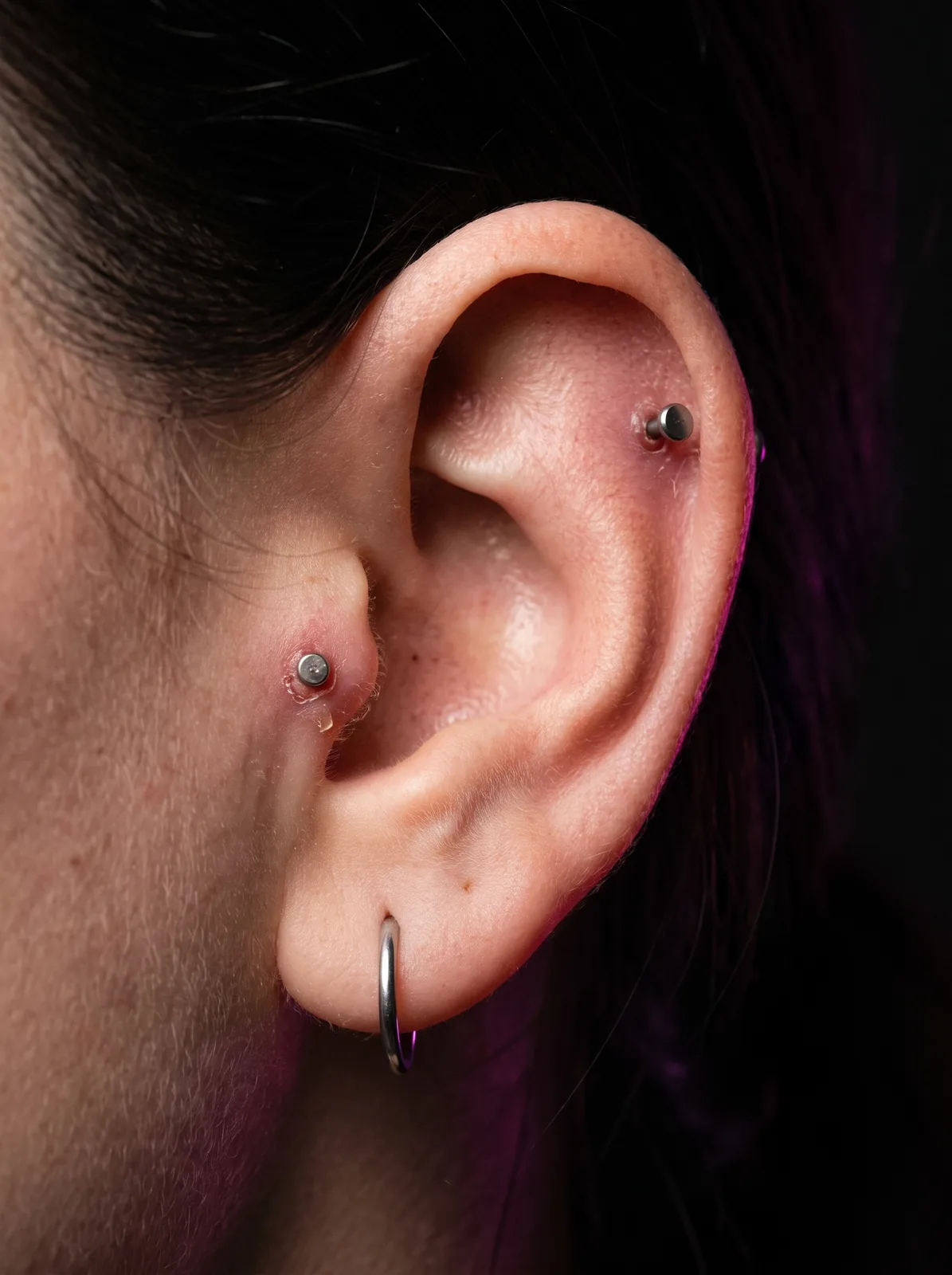
Is it normal for a new piercing to be more irritated than an older one nearby?
Some irritation in the first few days to weeks is normal, especially on cartilage. If it’s getting worse instead of better, or an older piercing suddenly acts up after a new one nearby, don’t guess — come in or text us and we’ll take a look.
Ready to plan the next piece of your stack? Build Your Ear Stack with a Pro →