
Belly Button & Surface Piercings: Healing Time, Pain, and Rejection Risk
A belly button piercing takes 6 to 9 months to fully heal — longer than a lobe or nostril — and it carries a higher rejection risk than most piercings because it sits through flatter, shallower skin near the navel’s rim. Jewelry quality and how much friction it takes from clothing matter more than luck, and both are within your control.
We won’t tell you rejection “won’t happen to you” — it’s a real risk here, and pretending otherwise doesn’t help you heal. Below: what drives that risk, what early rejection looks like, and what to do if you spot it.
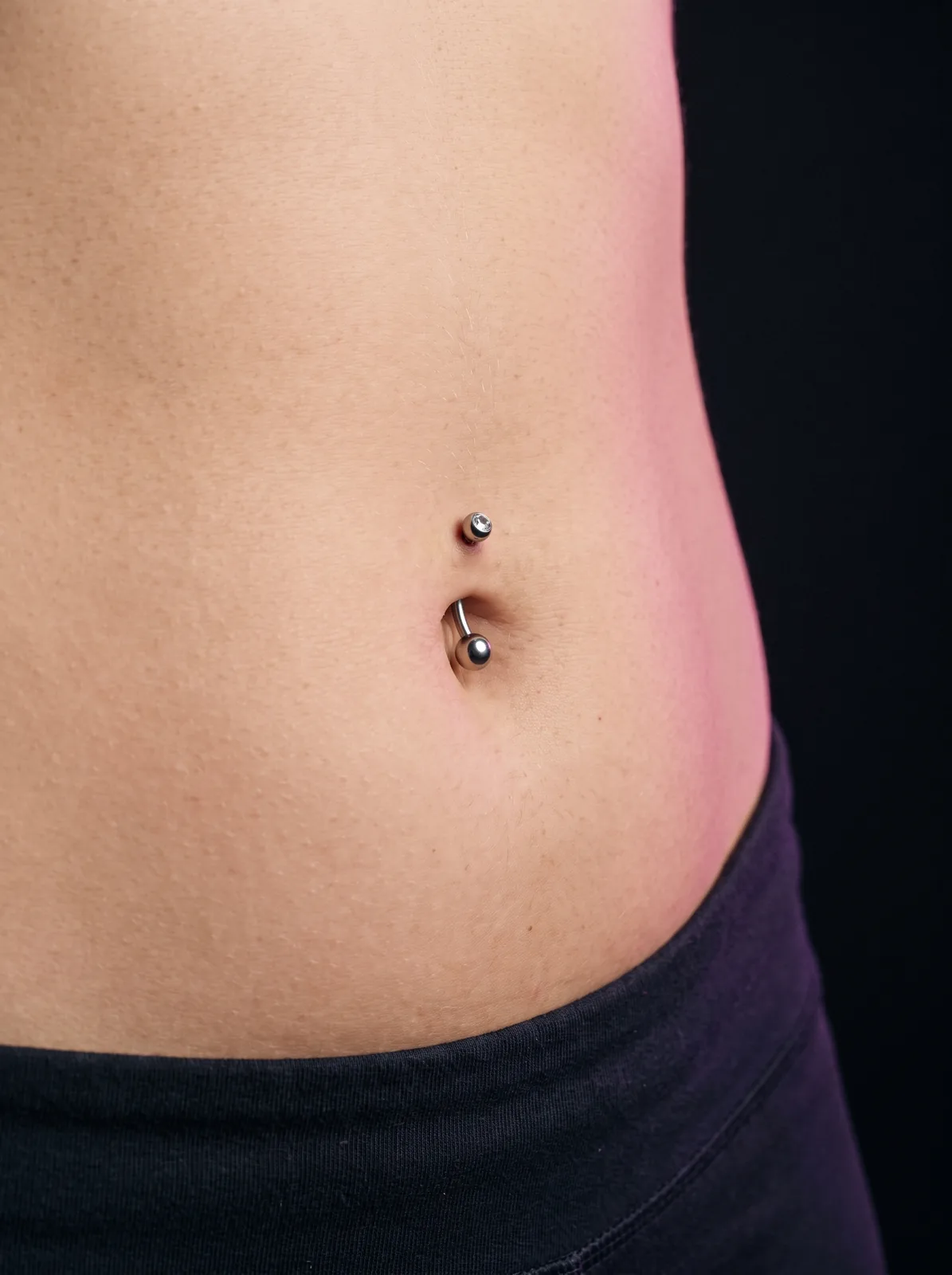
How Long a Belly Button Piercing Actually Takes to Heal
Most navel piercings need 6 to 9 months before they’re fully healed, sometimes longer depending on your body and how the healing phase goes. That’s a wider window than an earlobe (6–8 weeks) or a nostril (2–4 months), and it catches people off guard.
Here’s the trap: a navel piercing usually looks calm by week 6 or 8 — redness fades, swelling drops, it stops being sore. That’s not the same as healed. The tissue inside the channel is still fragile for months after the surface looks fine, which is exactly why this piercing gets knocked off track by a bump, a tight waistband, or a jewelry swap that happens too soon.
Why Navel and Surface Piercings Carry More Rejection Risk
A navel piercing runs through the skin at the rim of the belly button — a thin fold, but still a fold, which gives it more to anchor into than a true surface piercing (eyebrow, nape, chest, hip), which goes straight through flat skin with nothing to hold onto. That’s why surface piercings as a category have the highest rejection rates of any piercing type, and why navel piercings — sitting between an earlobe and a true surface piercing — inherit some of that risk. It’s not a flaw in your body; it’s just what this placement is working with.
What Rejection Actually Looks Like Early
Rejection is your body slowly pushing the jewelry up and out — gradual, not overnight. Catching it early is what makes the difference. Watch for:
- Jewelry sitting higher or closer to the surface than it did before.
- Skin over a bead looking thinner, shinier, or almost see-through.
- A visible track mark or redness forming along the direction the jewelry is moving.
- The bar tilting toward one edge instead of sitting straight.
- Persistent itching along a line, not just soreness around the piercing.
None of that automatically means infection, and it doesn’t mean you did anything wrong — but it’s not something to wait out on your own. If you notice any of this, come in or text us instead of self-diagnosing. Catching migration early gives you far more options than catching it after the jewelry has already worked most of the way out.
How to Lower the Risk
Two things move the needle: what jewelry you’re wearing, and how much friction it takes from daily life.
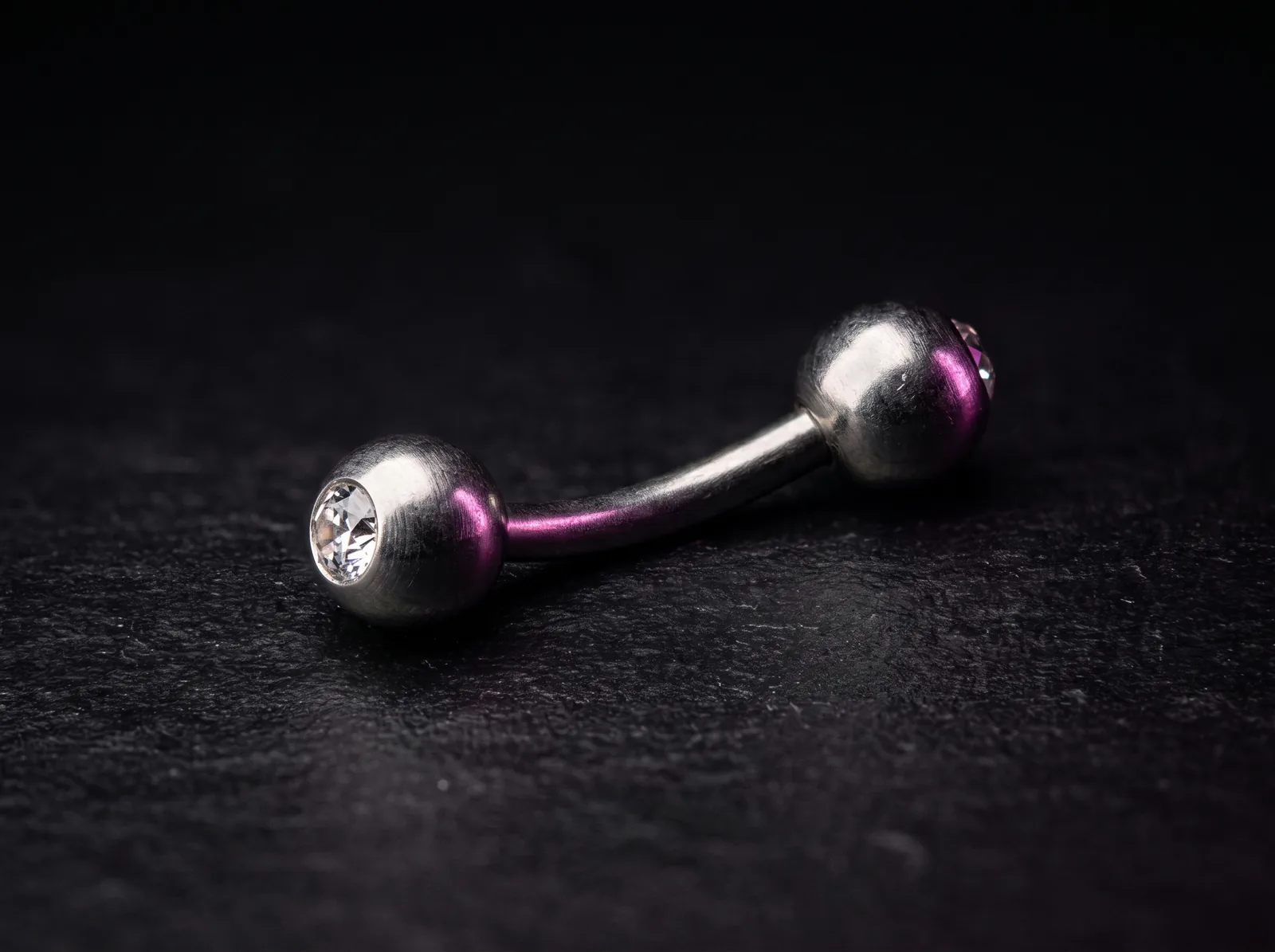
Jewelry. Implant-grade titanium is our standard for every piercing, navel included — biocompatible, low-reactivity, and better at handling the pressure that pushes cheaper metal toward rejection. Internally threaded jewelry and a bar that’s the correct length matter just as much as the material; a bar that’s too short pulls tight the moment you swell, and that tension is one of the more common rejection triggers. Full breakdown in our titanium vs. gold jewelry guide.
Clothing and movement. Waistbands are the biggest daily threat — skinny jeans, leggings, scrubs, anything sitting at or above the belly button rubs the bar for hours without you noticing. Seatbelts, gym belts, and ab work add the same friction. Stomach sleeping presses weight on it all night. None of that guarantees rejection, but consistent friction is what turns a healing piercing into a migrating one.
When to Remove or Change Jewelry
Don’t downsize the bar just because the swelling looks gone — it comes back with a long day on your feet, your period, or normal fluctuation, and a bar already sized down tight has nowhere to give. Let us check it and size you down once the tissue is actually ready.
If you’re seeing real rejection signs — thinning skin, visible migration, a widening gap — don’t wait it out. Come in and let us take a look. Repositioning or removing early can keep the skin from thinning out completely, which matters if you want to re-pierce that spot later. We’d rather see you early and be wrong than see you after it’s already migrated out.
Navel-Specific Aftercare
- Saline soak or spray, once or twice a day — that’s the whole routine. Skip ointments, alcohol, and peroxide.
- No soaking — baths, hot tubs, pools, open water — until fully healed. Showers are fine.
- Loose clothing over tight waistbands for the first few months.
- Wash your hands before touching it, and otherwise leave it alone.
- Stomach sleepers: adjust for a while. A pillow or position change takes pressure off overnight.
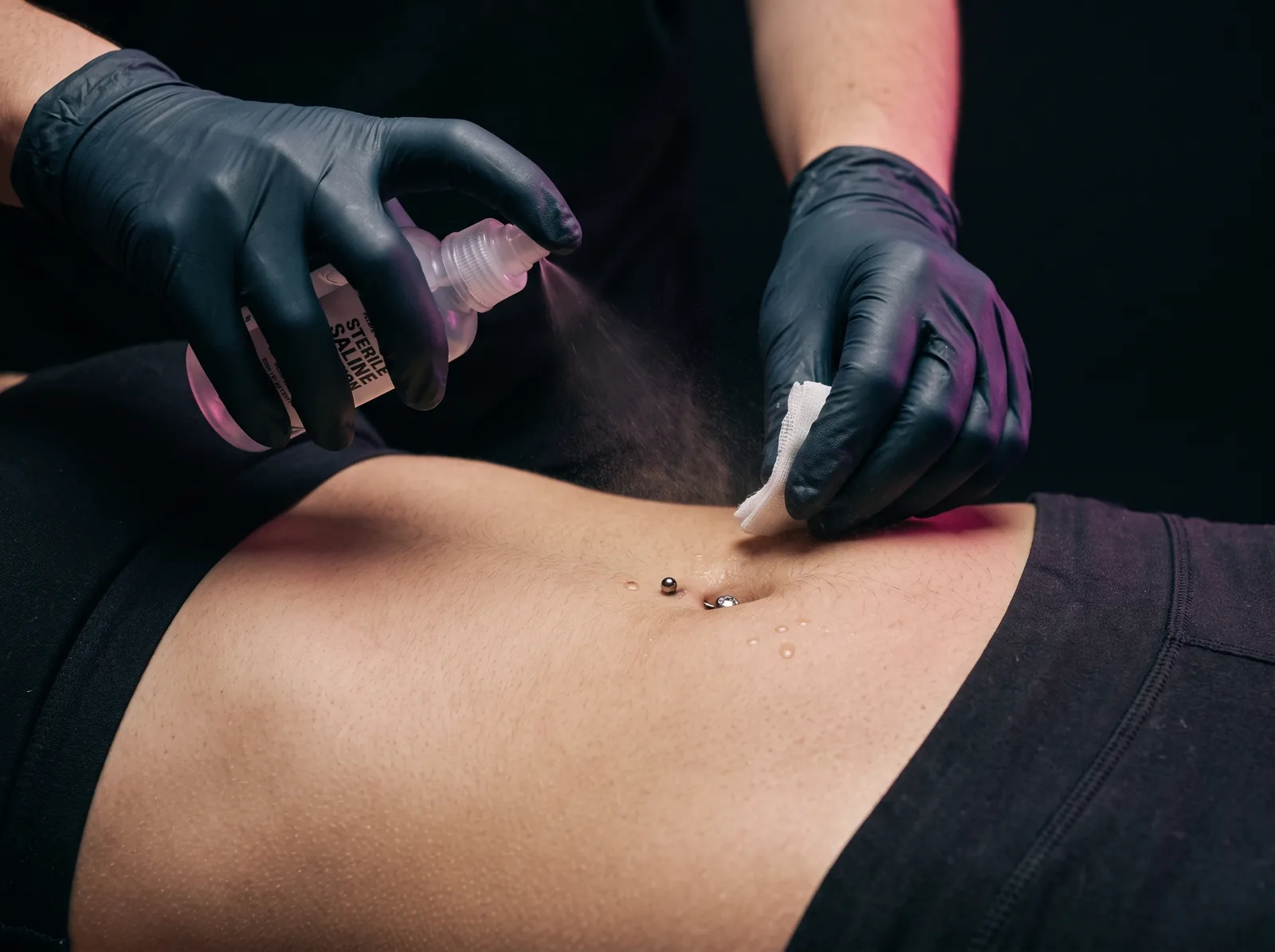
If something about your healing doesn’t match what’s described here, don’t sit with it. Our guide to spotting infection versus normal healing covers the broader signs — but for navel-specific questions, texting us a photo beats guessing from an article.
Thinking about a navel or surface piercing, or need your current one checked? Book a Piercing Consultation →
FAQ
Is it normal for the jewelry to move a little at first?
Some settling in the first days as swelling goes down is normal. Steady, one-direction movement over weeks — the bar creeping higher, skin thinning over it — is different and worth having checked. Not sure which one you’re seeing? Come in or text us rather than waiting to find out.
Will my belly button piercing definitely reject?
No. Most navel piercings heal fine, especially with the right jewelry and some attention to friction. The risk is real and higher than a lobe piercing, but it’s not the default outcome.
How do I tell if it’s infected versus just healing?
Redness and mild swelling in the first week is normal. Increasing pain after that, spreading redness, warmth, or non-clear discharge are signs to get checked. Rejection and infection aren’t the same thing and can look different — if you’re unsure, don’t self-diagnose. Come in or text us with a photo.
When can I switch to a shorter or different barbell?
Only once it’s fully healed, not just calm-looking, and ideally after we’ve checked it in person. Swapping too early — to a bar shorter than your swelling needs — is one of the more common ways a healthy-looking piercing starts to reject.
Not sure if what you’re seeing is normal? Talk to Us About Your Piercing →