
How to Plan a Sleeve Tattoo: Sessions, Budget & Timeline
A full sleeve typically takes 2 to 8 sessions, spaced several weeks apart so your skin can heal between sittings. Budgets range from a few hundred dollars for a small half-sleeve to well into five figures for a dense, full-color, full-arm piece, and the whole project usually spans several months to over a year from first line to final detail.
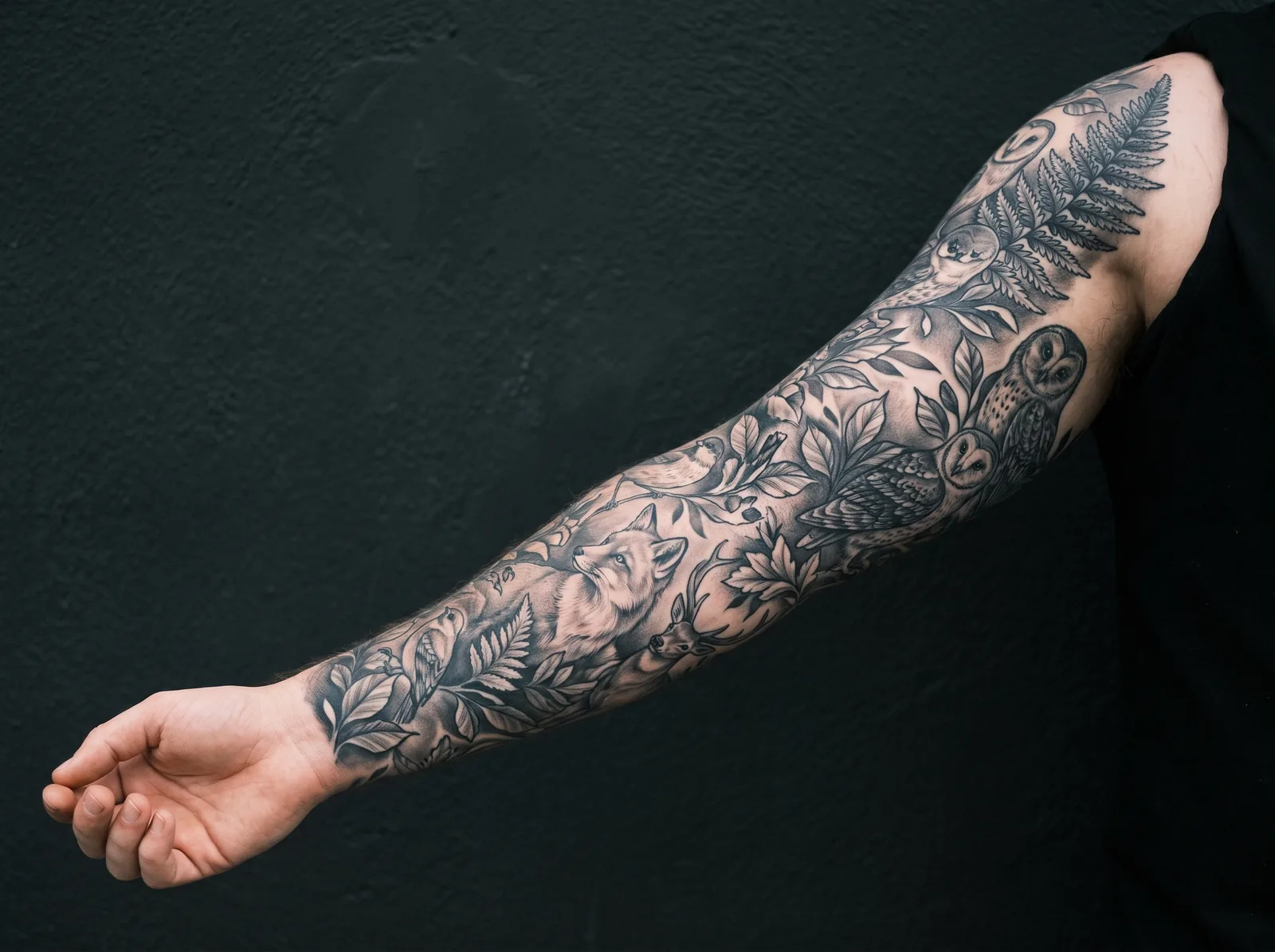
Most people typing “sleeve tattoo” into Google are looking for designs, not logistics. Fair enough — the visual is what pulls you in. But the design is the easy part to picture. The part that actually determines whether your sleeve turns out cohesive, or ends up looking like ten separate tattoos taped together on the same arm, is the plan behind it: how many sessions it takes, how the sessions are sequenced, and how the budget gets locked in along the way.
Sleeves are one of the most-requested large-scale projects we plan for clients at our Hallandale Beach studio, and the planning conversation is where most of the good decisions — and the expensive mistakes — actually get made. This article walks through that conversation: sessions, cost, timeline, and what a typical build looks like from Session 1 to the last sitting. For the full breakdown of how we structure large projects specifically, see our large-scale projects guide.
How Many Sessions Does a Full Sleeve Actually Take?
2 to 8 sessions is the honest range for a full sleeve, and where you land in it depends on a handful of things that matter more than the size of your arm:
- Coverage density. A sleeve with open negative space and simpler linework moves faster than one that’s packed edge to edge with no bare skin showing.
- Color vs. black & grey. Color is built in layers and needs more time to saturate and heal true. Black & grey moves faster per square inch, generally.
- Detail level. Fine linework and photorealistic shading both eat more time than bold traditional-style linework, just for different reasons — one is unforgiving of mistakes, the other is layered shading work. Our 1/3 rule breakdown explains how any single piece splits into linework, shading, and detail — that same math applies to each section of a sleeve, which is part of why session counts vary so much between two sleeves that look similarly sized on paper.
- Existing ink. If part of the sleeve has to incorporate or work around older tattoos, that adds planning and often adds a session, the same way a cover-up does.
- Half sleeve vs. full sleeve. A half sleeve (shoulder to elbow, or elbow to wrist) usually sits at the lower end of the range. A full sleeve, wrist to shoulder, usually needs the upper end, especially in color.
None of this is arbitrary. Every session on a large project is planned as part of the whole piece, not booked one at a time as a guess — which is exactly why the first consultation matters as much as it does.
What a Sleeve Tattoo Actually Costs
Tattoos in our studio generally run $80 to $2,000+ per piece or per session, depending on size, style, and artist — the same range that applies to any single tattoo, broken down in full here. A sleeve compounds that math across multiple sessions, so the honest way to think about a sleeve budget isn’t one number, it’s a running total that gets built session by session as the plan comes together.
Sessions run $1,200 for a half-day sitting or $2,000 for a full day. A half-sleeve in black & grey might land in the 2–4 session range; a dense, full-color full sleeve can run 4–8. That’s a wide planning range — a few thousand dollars up to five figures — which is exactly why we lock in the scope and a realistic session count at your consultation instead of quoting one total upfront.
A few things that move the total more than people expect:
- Color pushes the total up. Color sessions tend to run longer per session and there are usually more of them, since color is built and healed in layers.
- Rework and blending late in the project add sessions. The final pass that ties separate sections into one cohesive piece — evening out saturation, softening transitions, adding highlights — is real chair time, not a formality.
- A sleeve is a multi-year relationship with your artist, not a single purchase. Pricing gets set at the start of each stage, not guessed at for the whole project up front, which protects you from a number that was never realistic to begin with.
The full pricing structure — how sizes, styles, and session counts translate into a quote — lives on our pricing page.
How Long a Full Sleeve Takes, Start to Finish
Skin needs real time to heal between tattoo sessions, and most studios space sleeve sessions roughly 4 to 8 weeks apart, longer if a section needs extra healing time before it can be worked over again. That spacing is what makes the total timeline stretch out well beyond the hours actually spent in the chair.
Rough math: four sessions spaced six weeks apart puts you at about six months for a half-sleeve. Push that to seven or eight sessions with some scheduling gaps in between — travel, healing setbacks, life getting in the way — and a full color sleeve can easily run a year or more from first line to last detail. That’s normal. A sleeve is a project you commit to, not a weekend.
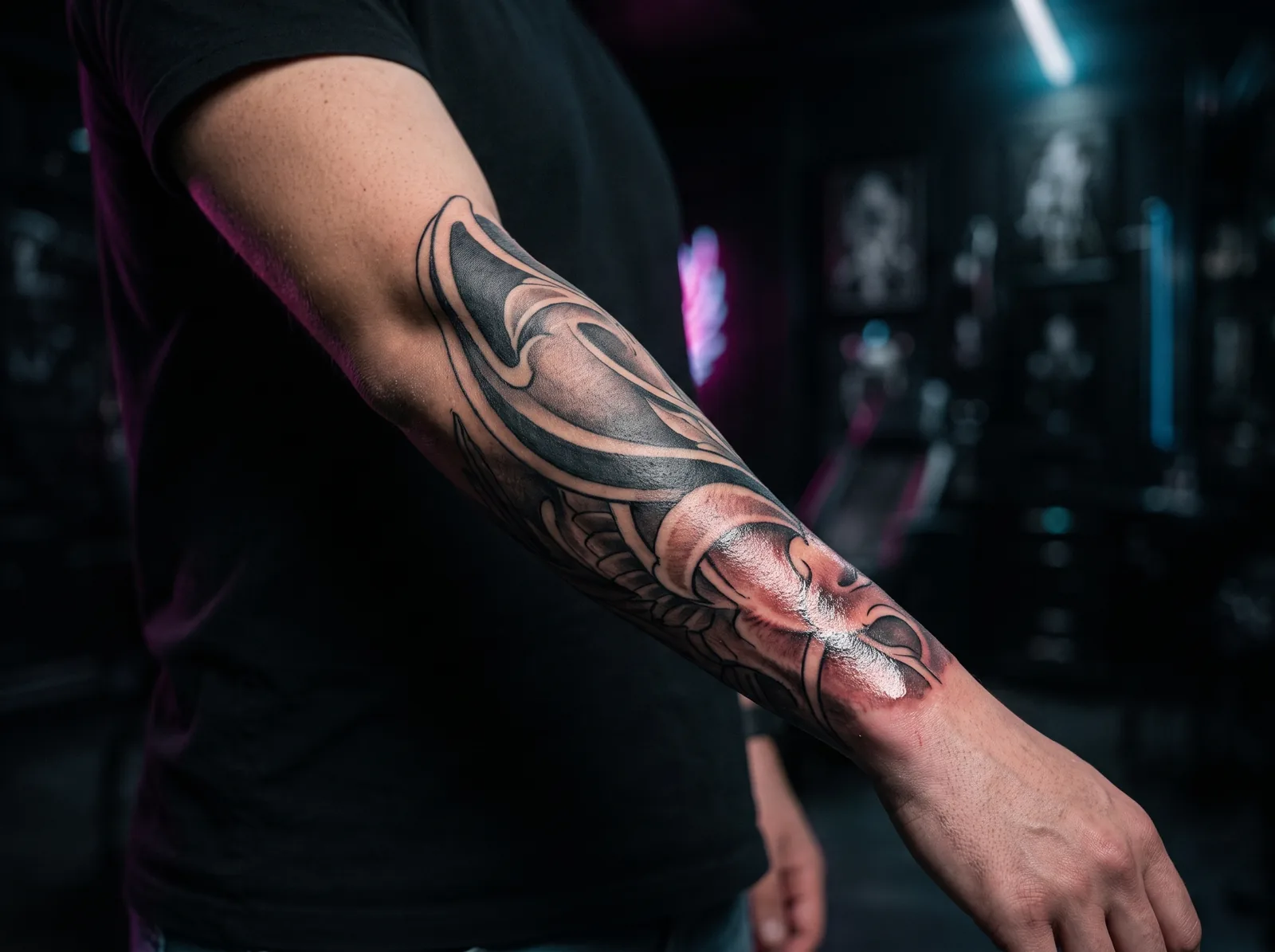
Session 1 → Session N: What a Typical Sleeve Build Looks Like
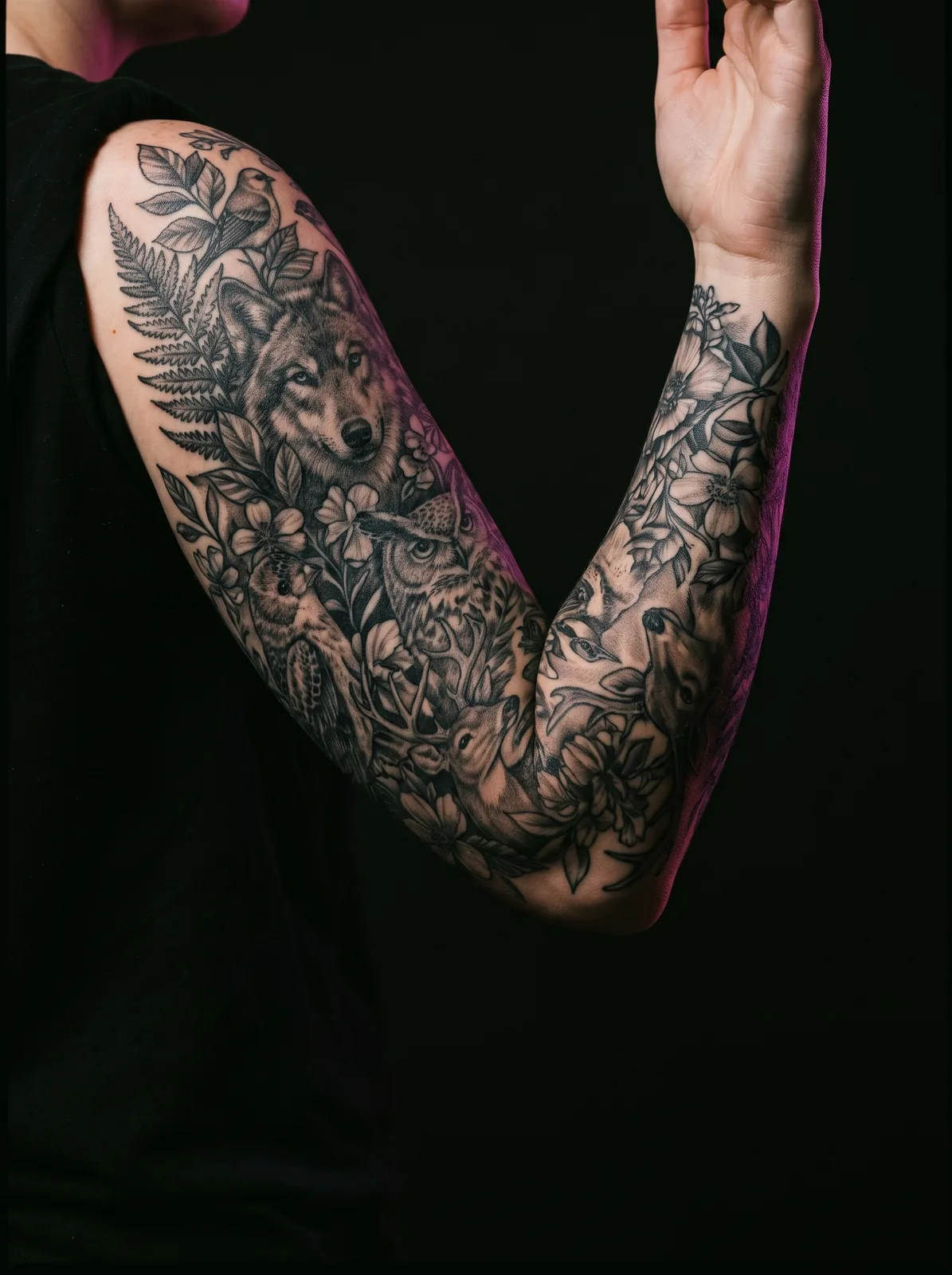
Every sleeve is different, but the shape of the process is consistent. Here’s what a typical build looks like, stage by stage.
Session 1: The Foundation
The first session is almost always the outline and the anchor piece — the largest or most central image that everything else gets built around. We don’t fill in detail everywhere at once; we lock the skeleton of the design onto your actual arm, not just onto paper, because curves, muscle, and existing ink all change how a design reads once it’s real.
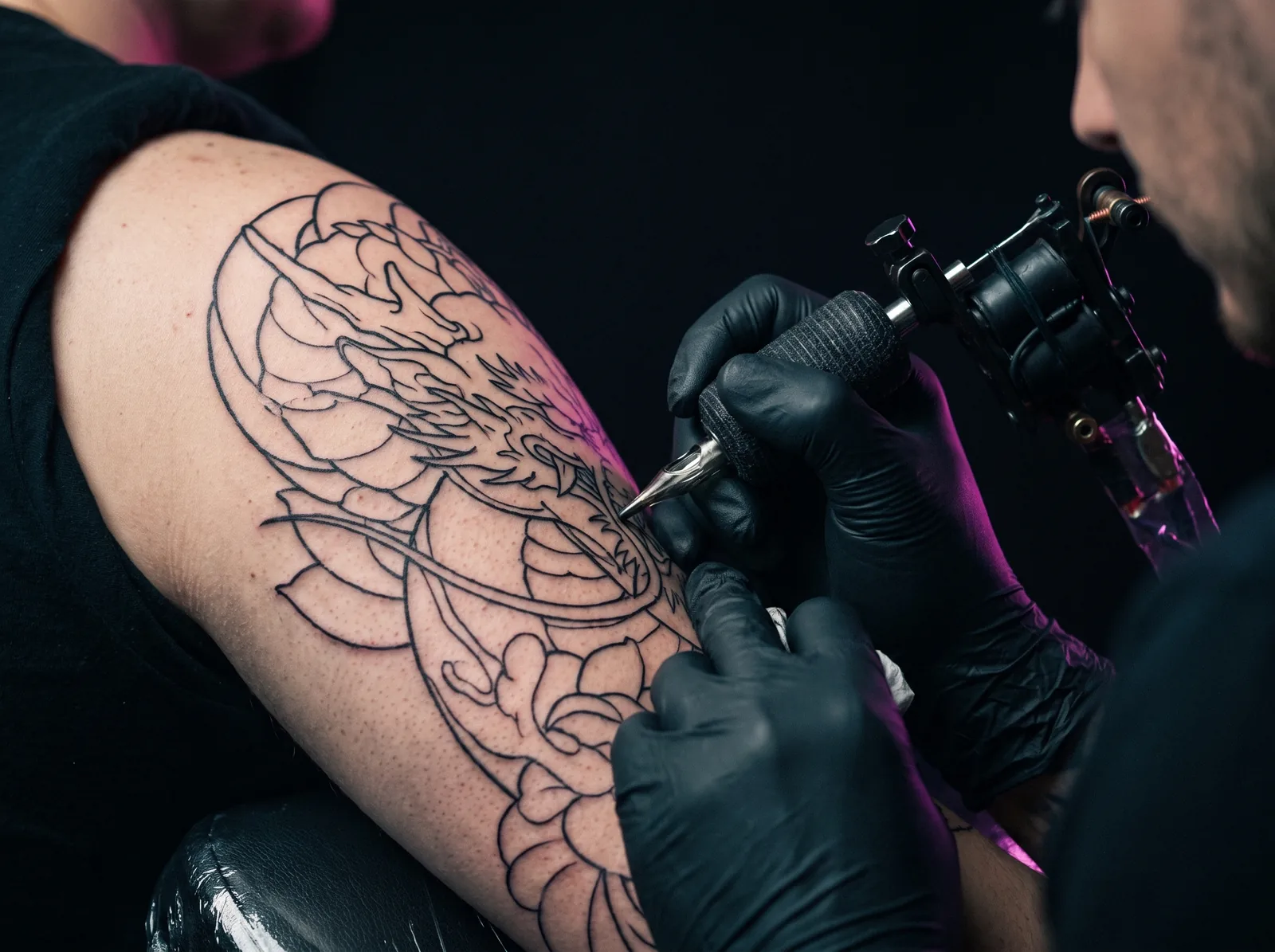
Sessions 2–3: Building Out the Body of the Piece
With the anchor in place and healed, the next sessions extend the linework into the surrounding sections and start the first layer of shading or color. This is usually the longest stretch of the project — the least glamorous part, and the part that decides how everything else will sit together later.
Middle Sessions: Shading, Color, and Blending
This is where a sleeve starts reading as one piece instead of separate tattoos. Shading gets deepened, color gets built up in layers if that’s the style, and transitions between sections — where one image flows into the next — get worked and reworked until there’s no obvious seam.
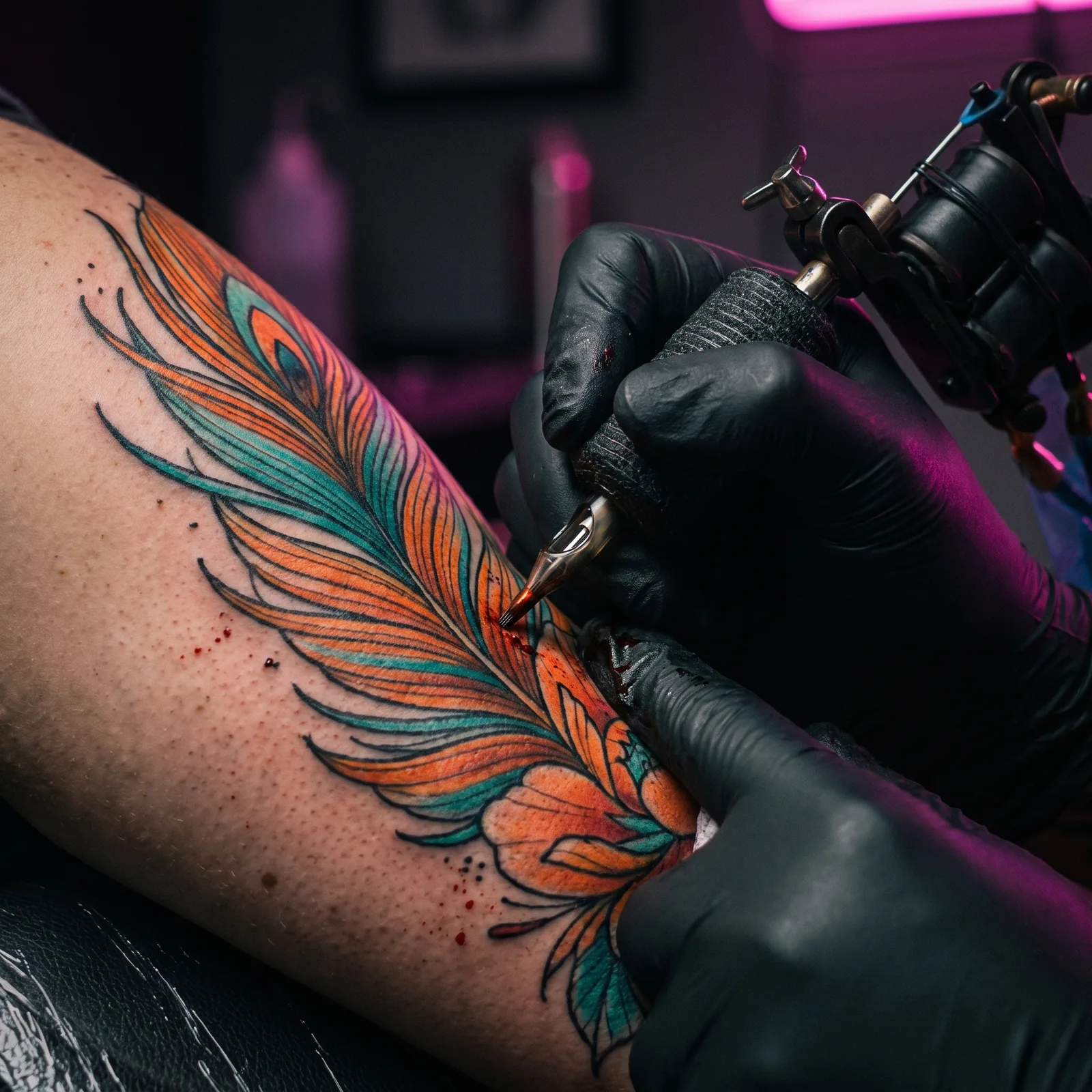
Final Session: Detail, Highlights, and Tie-Together
The last session is about finishing, not adding — fine detail, highlights, contrast adjustments, and any touch-ups on earlier sections that shifted slightly during healing. This is the session that makes a sleeve look intentional instead of assembled.
Healing Between Every Session
Every session above is separated by real healing time, not a formality on a calendar. Skin needs to fully settle before it can be worked over again cleanly, so the gaps between sessions aren’t downtime, they’re part of how the piece ends up looking finished instead of overworked.
How Per-Stage Pricing Gets Locked In
Large projects don’t get one all-or-nothing quote at the first consultation, because nobody can price eight sessions of a design that hasn’t been fully mapped out yet. Instead, pricing gets locked in stage by stage as the plan solidifies:
- The consultation sets the overall scope — coverage, style, and a realistic session-count range, which gives you a budget ballpark before you commit to anything.
- Each session gets priced as it’s booked, based on what that specific sitting covers, so you’re never guessing what a single appointment will cost.
- A deposit holds each scheduled session and secures your artist’s time and any design work done ahead of the appointment — the exact amount is confirmed when you book, and it comes off that session’s price.
- You pay stage by stage, not all upfront. Large projects are priced and paid session by session as the plan progresses — never one lump sum for the whole sleeve before work starts.
Want the sessions mapped out instead of guessing? Get a Session Plan in 24h →
Are You Ready for a Sleeve? A Quick Gut-Check
A sleeve is a bigger commitment than a single tattoo, in money, in time, and in how much of your arm it’s going to take over. Before you book a first session, it’s worth being honest with yourself about a few things:
- You have a realistic budget range in mind — not a number you found on a forum for someone else’s arm, but a ballpark you’re comfortable spending across multiple sessions over time.
- You can commit to the full timeline, including the gaps between sessions for healing, not just the hours in the chair.
- You’re planning one cohesive piece, not a collection of unrelated tattoos that happen to be on the same arm. A sleeve that’s planned as a whole ages and heals more consistently than one built up piecemeal.
- You’ve thought about placement and coverage — full sleeve vs. half sleeve, and whether you want any bare skin left as breathing room in the design.
- You’re prepared for repeat sessions on skin that’s already tattooed, which can feel different than a first session on bare skin.
- You’re not in a rush. A sleeve done properly takes months, sometimes over a year. Rushing it usually means rushing the healing time between sessions, which is where problems start.
If that list sounds like you, the next step is a consultation, not a guess. Bring reference images, tell us what you’re picturing for coverage, and we’ll map out a realistic session count and timeline before anything gets tattooed.
FAQ
How many sessions does a full sleeve take?
Most full sleeves take 2 to 8 sessions, depending on coverage density, color vs. black & grey, and how much detail is packed into the design. A simpler half-sleeve in black & grey sits at the low end; a dense, full-color, full-arm piece sits at the high end.
How much does a sleeve tattoo cost total?
There’s no single number — a sleeve is priced session by session. Sessions run $1,200 (half-day) to $2,000 (full-day), and most full sleeves take 2 to 8 sessions, so total investment typically spans a few thousand dollars up to five figures depending on coverage and color. Your consultation narrows that into a real number for your specific design.
How long should I wait between sleeve sessions?
Most studios space large-project sessions roughly 4 to 8 weeks apart to let the skin fully heal before working over it again. Rushing that spacing can affect how a piece heals and how well later sessions blend with earlier ones.
Can I start with a half sleeve and add to it later?
Yes, and it’s a common way to start a large project without committing to the full timeline and budget up front. The key is planning the half sleeve with the eventual full sleeve in mind from the start, so there’s room in the design to extend it cleanly later instead of boxing yourself in.
Does a sleeve hurt more as the sessions go on?
Pain varies by person and by placement more than by session number, but tattooing near or over already-worked skin can feel different from a first session on bare skin. Your artist will flag anything session-specific worth knowing — extra healing time on a section, which order to sequence pieces in — as part of planning each sitting.
Ready to see what your sleeve actually looks like on paper — sessions, budget, and timeline? Get a Session Plan in 24h →